
In Western North Carolina, winter may slow plant growth, but it reveals more about your landscape than any other season. With leaves gone and turf dormant, underlying issues become easier to spot—giving homeowners a valuable opportunity to protect their property and plan smart improvements before spring arrives.
Winter isn’t a pause. It’s a diagnostic season.
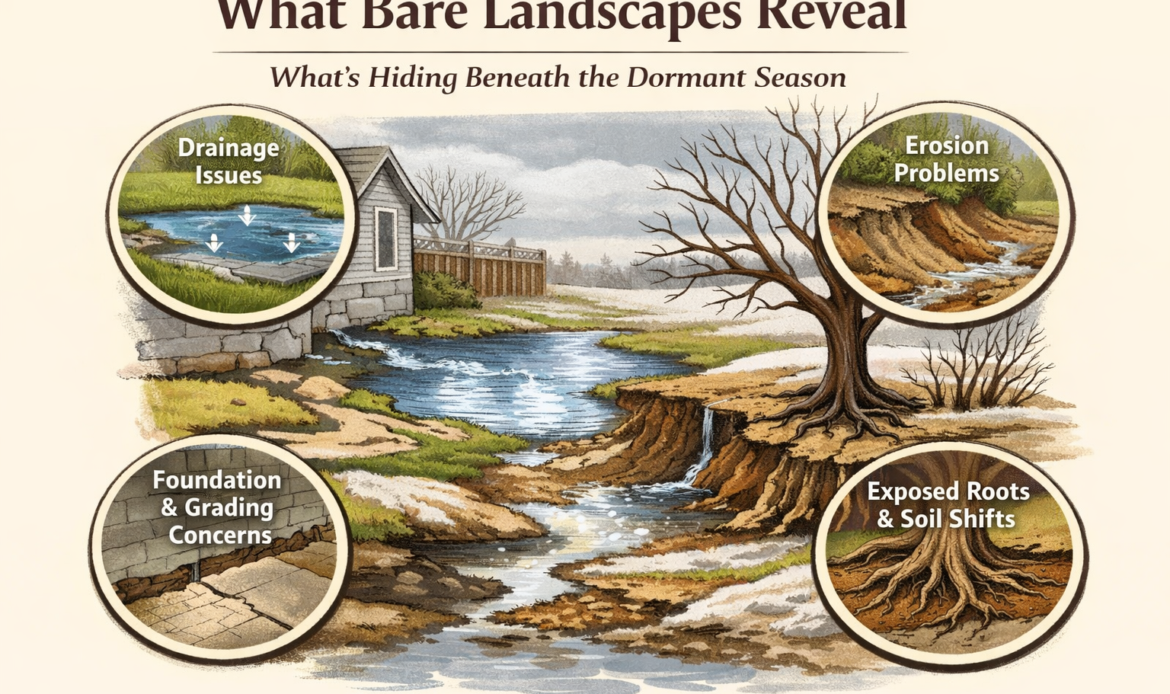
What Bare Landscapes Reveal
When plants go dormant, the structure of your landscape comes into focus. Areas that seemed fine in summer often show signs of trouble once growth recedes.
Common winter reveals include:
- Drainage problems, where water pools or channels through beds and lawns
- Erosion on slopes, especially after winter rains
- Grading issues around foundations, walkways, or driveways
- Exposed roots or soil movement near trees and hardscapes
These issues don’t develop overnight—they’ve usually been forming quietly for months or years. Winter simply removes the camouflage.
Spotting them now allows time for thoughtful planning, rather than rushed fixes during the busy spring season.
Dormant Doesn’t Mean Dead
One of the biggest misconceptions about winter landscapes is that nothing should be touched. In reality, winter care plays a critical role in how plants perform in spring.
Dormancy pruning is one of the most important winter practices in the mountains. With foliage gone, trees and shrubs can be evaluated for structure, health, and safety. Removing dead, damaged, or crossing branches reduces storm risk and encourages stronger, more balanced growth when warmer weather returns.
Soil protection is equally important. Mulch and pine straw applied in winter help regulate soil temperatures, protect roots from freeze–thaw cycles, and reduce erosion. While mulch adds visual polish, its real value lies below the surface—stabilizing soil and preserving moisture during unpredictable winter conditions.
What shouldn’t be done? Heavy fertilization, unnecessary plant removal, or aggressive cutting of spring-blooming plants. Winter care is selective, intentional, and focused on long-term health.
The Impact of Freeze–Thaw Cycles
Western North Carolina’s winter weather is defined by fluctuation. Temperatures rise and fall, soils expand and contract, and moisture moves constantly through the ground.
These freeze–thaw cycles can cause:
- Soil shifting that affects grading and drainage
- Root heaving around trees and shrubs
- Movement in retaining walls, steps, and walkways
- Accelerated erosion on slopes and exposed areas
Left unaddressed, small winter changes can become major spring repairs. Winter inspections help identify where reinforcement, stabilization, or redesign may be needed before growth resumes and access becomes limited.
Winter Landscape Myths—Debunked
Many homeowners believe:
- “Nothing can be done in winter”
- “Pruning always harms plants”
- “Mulch is only for looks”
- “Erosion waits until spring”
In mountain environments, these myths can lead to preventable damage. Winter is when erosion accelerates, structural issues appear, and proactive care makes the biggest difference.
Landscaping isn’t just about growth—it’s about protection, structure, and preparation.
Planning Ahead Pays Off
Spring is the busiest season for landscape work, and by the time plants leaf out, many underlying issues are hidden again. Winter offers clarity—and time.
Evaluating drainage, slopes, trees, and hardscape now allows homeowners to:
- Prioritize safety-related improvements
- Plan repairs and enhancements strategically
- Avoid spring scheduling bottlenecks
- Start the growing season with confidence
A well-cared-for landscape doesn’t begin in spring—it’s built year-round.
If you know what to look for, winter tells you exactly what your landscape needs next.