
Preparing Your Property for Spring—Before Spring Arrives
February in Western North Carolina is a transition month. Winter hasn’t fully released its grip, but subtle changes are already happening beneath the surface of your landscape. Freeze–thaw cycles, winter rains, and dormant vegetation reveal issues that are often hidden during the growing season. For homeowners in Asheville, Cashiers, Sylva, Waynesville, and Highlands, February is one of the most important—and overlooked—times to care for and plan your landscape.
At B.H. Graning Landscapes, Inc., we see February as a strategic month. The work done now protects your property, prevents costly repairs later, and sets the stage for a stronger, healthier landscape in spring.
What Winter Reveals About Your Landscape
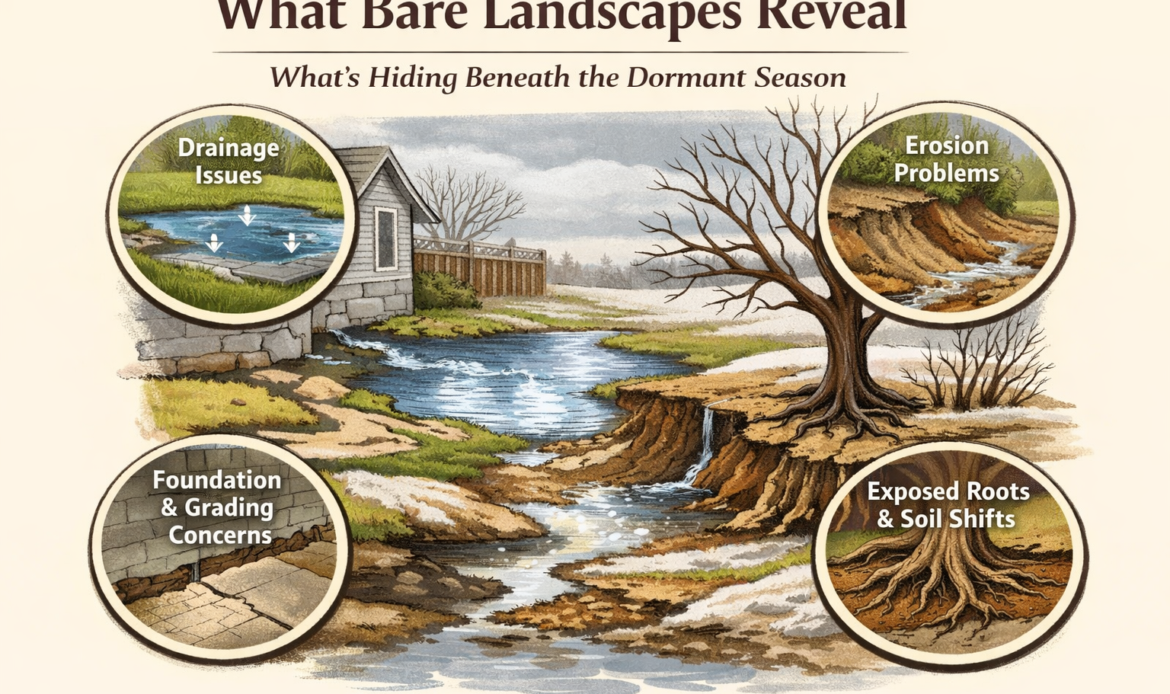
With lawns dormant and plants bare, February offers a clear view of how your landscape truly functions. Common winter discoveries include:
- Drainage problems where water pools or channels across lawns and beds
- Erosion on slopes, especially after heavy winter rains
- Grading issues near foundations, walkways, and driveways
- Exposed roots or shifting soil around trees and hardscapes
These issues rarely develop overnight. Winter simply removes the camouflage. Addressing them now allows for thoughtful planning instead of rushed spring repairs—when schedules are full and costs can be higher.
Why February Is Ideal for Mulch and Pinestraw
Mulch and pinestraw aren’t just springtime finishing touches. In the mountains, February installation plays a critical role in landscape health:
- Insulates soil against temperature swings
- Reduces erosion during winter rains
- Protects roots from freeze–thaw damage
- Improves soil structure ahead of spring growth
Fresh mulch also defines beds early, making spring maintenance more efficient. Installing now ensures your landscape is protected before plants begin actively growing.
Inspecting Hardscapes and Structural Elements
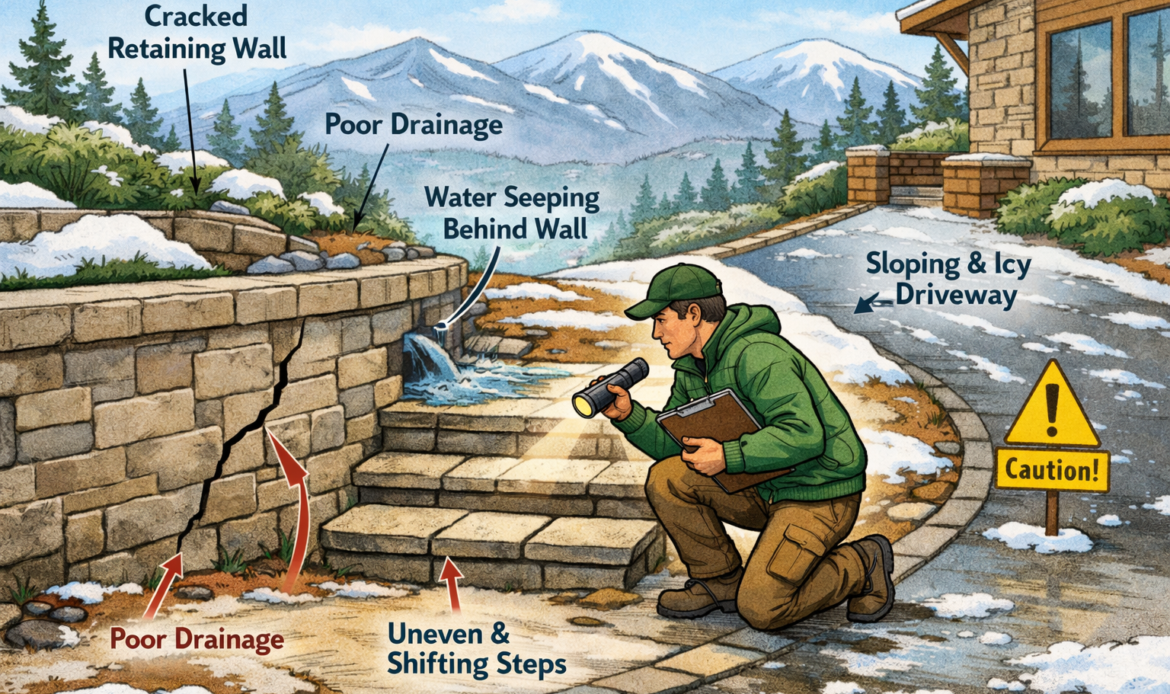
Mountain landscapes rely heavily on structural features like retaining walls, steps, patios, and driveways. February is the best time to inspect these elements for:
- Cracks, leaning, or bulging walls
- Drainage failures behind retaining walls
- Shifting pavers or settling steps
- Safety concerns near slopes and access points
Early identification allows repairs to be scheduled before spring use increases and before minor issues become structural failures.
Planning Ahead Beats Spring Rush
One of the biggest advantages of February landscaping is planning. Whether you’re considering drainage improvements, grading corrections, new plantings, or hardscape upgrades, starting the conversation now provides:
- More flexibility in design and scheduling
- Better material availability
- Time for permits or engineering if needed
- A smoother transition into spring installation
Mountain properties are complex. Early planning ensures solutions are tailored to your site—not rushed to meet seasonal demand.
A Smarter Start to the Growing Season
February may feel quiet, but your landscape is already preparing for what’s next. By addressing problems early, protecting soil and roots, and planning improvements now, you’re investing in a landscape that performs better, looks better, and costs less to maintain over time.
For homeowners across Western North Carolina—from Asheville to Cashiers, Sylva to Waynesville, and throughout the Highlands—February is not downtime. It’s opportunity.
If you’re ready to take advantage of the season, the team at B.H. Graning Landscapes, Inc. is here to help your landscape transition confidently from winter into spring—stronger, safer, and built for the mountains.